
Giving credit when many hands build something together
AI systems blend the work of thousands of people into one answer and drop the credits. We propose tracking which contributions actually changed an answer, by testing what happens when each is removed, so credit and accountability survive long chains of collaboration.
In science, journalism and open-source software, citations tell a reader where a claim came from, so it can be traced back and checked. Large AI systems read millions of papers, manuals, forum answers and code libraries, blend them into one voice, and hand back an answer without the labels. When the answer is good, nobody knows whose work to credit. When it is wrong, nobody knows which source to fix.
Why missing credit hurts more than pride
When an AI assistant gives you a confident answer without showing whose work it leaned on, two things go wrong at once.
First, the people who did the hard, patient work of gathering real-world knowledge become invisible. A rural nurse who wrote clear triage guides, a botanist who catalogued local crop pests, or a volunteer maintaining open code sees their craft absorbed into a nameless summary.
Over time, melting everyone's craft into an unmarked bar dries up the well. Why should a master electrician publish a careful guide, or a local society digitize parish registers, if a giant machine swallows their work without a nod?
Second, the person reading the answer loses the ability to check whether it deserves trust. A smooth paragraph that draws on a verified clinical handbook looks identical on the screen to one stitched together from an old rumour. Without provenance, an honest record of where each piece came from, fluency masquerades as authority.3
What this means
Credit is not just a polite nod at the end of a project. In shared intelligence, knowing which contributions made an answer work is how we keep both fairness and accountability alive.
The puzzle of a team effort
Keeping an honest record gets tricky when several specialist tools and datasets work together on the same task. Suppose a family uses a personal assistant to check an unclear hospital bill or a complicated housing lease. Behind the scenes, three different community tools help out:
- A public-records lookup tool that retrieves the current statutory rules for the family's town.
- A plain-language checker trained by legal-aid volunteers to spot unfair clauses buried in fine print.
- A verification tool that double-checks every cited rule number against the official register so nothing is invented.
When the final summary catches a serious error in the lease, who deserves the credit? Giving all the credit to the last tool that spoke is like thanking only the newsreader who read the evening bulletin while ignoring the reporters who checked the facts.
Think of how a documentary film crew or a university research lab handles this instead. On a film set, the lead actor's face fills the screen. Still, the scene falls flat if the boom operator misses a line, the colourist muddies the shadows, or the archivist fails to clear a historical photograph. Everyone's role is recorded on the call sheet and the closing credit roll because each craft had to hold up its end.
On the other hand, splitting credit evenly among every tool that happened to be in the room invites clutter. An idle tool that added ten pages of irrelevant boilerplate would stand on equal footing with the specialist check that actually caught the mistake.
Testing what changes when a piece is removed
In 1953, the mathematician Lloyd Shapley asked a general version of this question: when a coalition of players cooperates to achieve a result, how can we measure what each participant truly contributed?1
His answer rests on an intuitive idea. To see what one contributor brings to a team, look at what changes when they step into, or out of, different combinations of teammates. Machine-learning researchers have adapted this counterfactual credit method to measure which training examples and tools actually improve a model's answers.2
This way of weighing contributions respects four simple rules of fairness that anyone who has worked on a group project will recognise:
- No contribution, no false credit. If removing a tool or dataset changes nothing about the accuracy of the final answer, it claims no credit.
- Equal work gets equal standing. Two contributors that strengthen an answer in the exact same way are recognised equally.
- Complementarity counts. Sometimes a local dataset only shines when paired with a careful reasoning tool. Testing combinations recognises both partners.
- Warnings about bad inputs. If a noisy source makes answers worse whenever it joins the team, the record flags its negative effect so maintainers can fix it.
Walk through how that removal test plays out in our family's housing lease check. With all three tools working together, the assistant catches an unlawful late-fee clause and cites the exact town bylaw. Now ask what happens if we replay that check with the idle boilerplate tool removed: the answer stays just as accurate, so the padding tool gets zero credit.
Next, ask what happens if we remove the legal-aid volunteers' plain-language checker. Suddenly the assistant misses the hidden fee trap altogether. That sharp drop proves the volunteer rule-set did real work, so its thread stays bright and named in the final receipt.
Tracing the reasoning graph without wasting effort
There is a practical catch with classical counterfactual testing. If twenty tools contribute to a task, re-running every combination from scratch would take over a million trial runs. Nobody wants to wait an hour or burn a roomful of electricity just to print the credits.
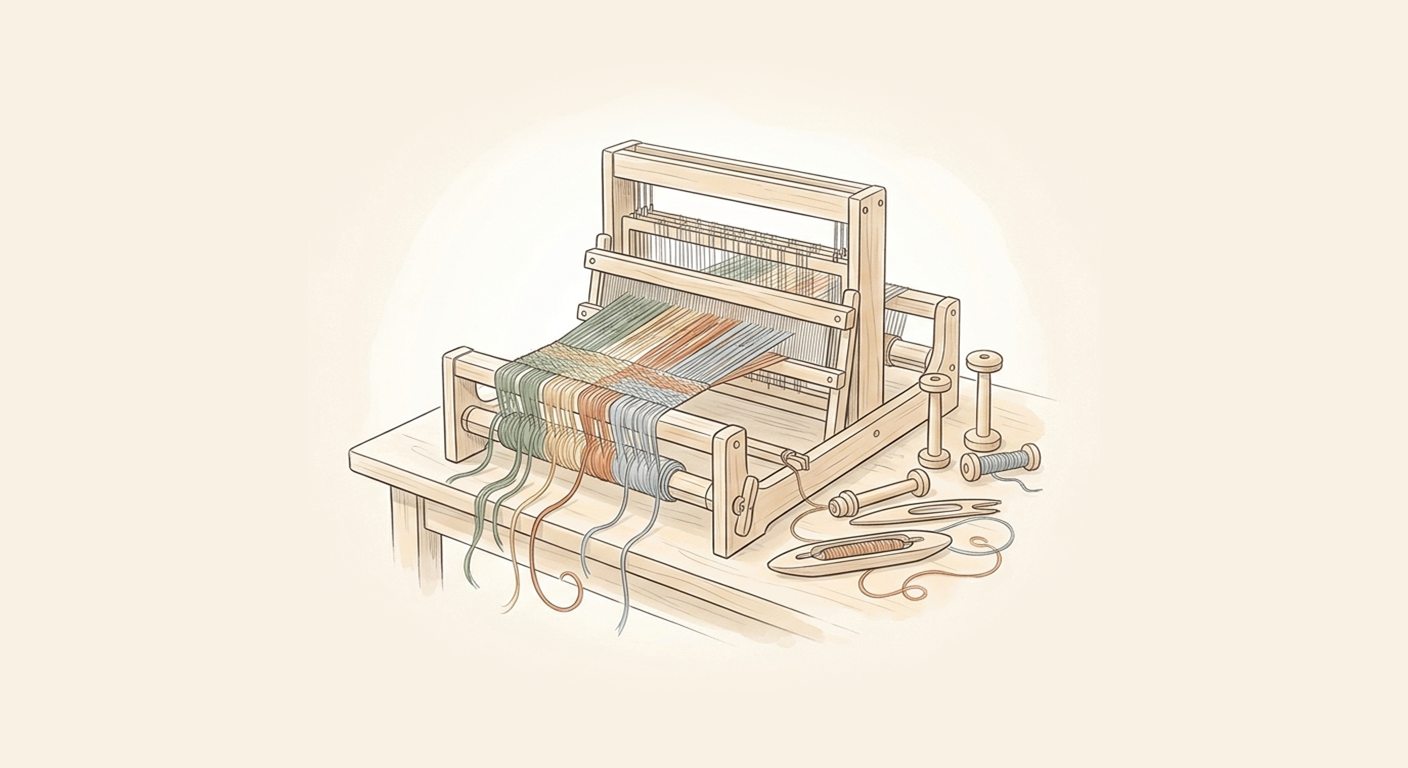
Fortunately, when specialist assistants collaborate in structured steps, they do not melt their work into an unmarked pot. Instead, they weave a clear trail of how each conclusion was built, much like following individual coloured threads across a loom. One tool supplies a verified fact, a second combines two facts to test a rule, and a third checks the final step.
Because that trail forms a clear map of dependencies, what standards bodies call a provenance graph, we do not have to guess in the dark.3 If a tool's output was never woven into the final reasoning chain, we already know removing it changes nothing. By tracing only the upstream facts and checks that actually supported the conclusion, a network records accurate credit in a single pass. Recent methods show this counterfactual accounting can run directly alongside regular model updates rather than requiring full restarts from scratch.4
Where this gets hard
Even with good maths and clean provenance records, giving fair credit in AI is far from solved:
- Deep foundations are easy to overlook. Tracing the three tools that answered a question today is easier than tracing the thousands of teachers, writers, and maintainers whose work shaped the base model years earlier. A film credit roll names the camera operator and the sound mixer on set, yet rarely names the lens grinder who perfected the glass fifty years ago.
- Gaming the trail. If contributors know credit follows citation links, some may split one simple lookup into five artificial steps or pad workflows with redundant checks. Independent verification must test whether removing a step genuinely changes the outcome.
- Privacy versus public credit. Sometimes a helpful pattern comes from people who want their community lesson shared, say, a rare symptom pattern noticed by a patient group. They may want that knowledge available without having their personal names exposed on a public board. Good provenance lets a community group or clinic hold collective credit while keeping individual lives private.
Keeping the human story visible
Intelligence is never conjured out of thin air by a lone machine in a data centre. Every useful answer is a relay race run by teachers, archivists, researchers, craftspeople, and maintainers who cared enough to get something right and share it.
We do not have to melt human knowledge into an unmarked ingot. When we build AI systems that attach verifiable receipts and preserve the lineage of who helped, we do more than honour good work. Like a handwoven cloth or an honest credit roll, we give every reader a thread back to the hands that wove it. That shared record gives all of us a reason to keep contributing to what we build together.
Sources
- Lloyd S. Shapley, "A Value for n-Person Games," in Contributions to the Theory of Games, Volume II, edited by Harold W. Kuhn and Albert W. Tucker, Princeton University Press (1953), pp. 307–317. ↩
- Amirata Ghorbani and James Zou, "Data Shapley: Equitable Valuation of Data for Machine Learning," Proceedings of the 36th International Conference on Machine Learning (ICML), PMLR Vol. 97 (2019), pp. 2242–2251. ↩
- Paul Groth and Luc Moreau (eds.), PROV-Overview: An Overview of the PROV Family of Documents, W3C Working Group Note, World Wide Web Consortium (2013). ↩
- Meng Ding, Zeqing Zhang, Di Wang and Lijie Hu, "In-Run Data Shapley for Adam Optimizer," arXiv:2602.00329 [cs.LG] (February 2026). ↩


