Keeping the craft, dropping the chores
AI assistants should take over the paperwork around skilled work, not the work itself. We propose drawing the line task by task: clerical chores go to the assistant, while the craft, the mentoring and the hard judgment calls stay with people.
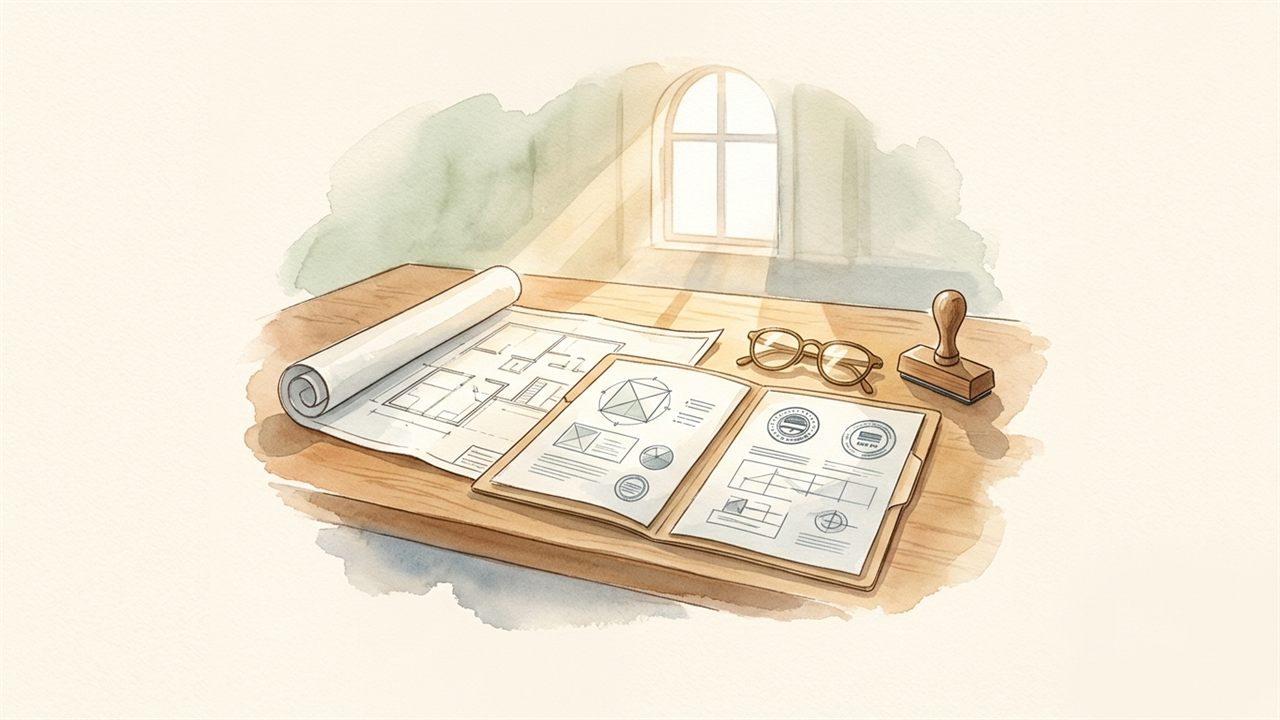
In one time-and-motion study, doctors spent nearly two hours on electronic records and desk work for every hour with patients, plus more after hours.1 Teachers and tradespeople describe the same pattern. People rarely burn out from the work they trained for. They burn out from the forms wrapped around it.
Automating whole jobs aims at the wrong target. Automating the chores inside them, and leaving the skill and the judgment where they are, is more useful and does less damage.
Why automating a whole job is the wrong target
When large technology companies talk about the future of work, they often speak as if an occupation were a single lump to be replaced from end to end. They pitch autonomous software that promises to act as the doctor, the lawyer, the teacher, or the designer in one sweep.
That approach is like a neighbourhood bakery replacing its baker with a coin-operated vending machine. You still get something wrapped in plastic at the bottom of the chute, but the warmth, the crust adjusted for a humid morning, and the human craft disappear.
Or think of a cockpit autopilot that handles every turn for months, leaving the human pilot rusty until a sudden storm hits. When automation pushes the practitioner to the margins, the human becomes a tired clerk rubber-stamping a screen. They carry the blame when things go wrong, yet lose the daily practice needed to stay sharp.
Economists who study work closely have long pointed out why full-job automation gets human skill upside down. As David Autor, Frank Levy, and Richard Murnane showed in their foundational study of technology and work, a human job is never a single uniform activity.2 Every job is a bundle of very different tasks.
Some tasks are routine and rule-bound: copying dates between calendars, checking whether a supplier invoice matches a packing slip, or formatting a regulatory table. Other tasks call for tacit human judgment, physical touch, moral responsibility, and genuine presence with another person.2
When an AI system tries to swallow the whole bundle at once, it fails in two painful ways. It makes confident mistakes on high-stakes human decisions where context lives outside the screen, and it flattens the personal voice and care that make good work worth doing.
What this means
The right question for AI at work is never "How do we automate this profession?" Rather, ask: "How do we clear administrative chores off the workbench so professionals can practice their craft?"
The master luthier's workshop
Picture a master luthier's workshop one morning. Sunlight falls across a workbench where a violin top of seasoned Sitka spruce is being carved by hand.
No sensible luthier wants a machine to take over the gouge or decide when the spruce soundboard has reached its resonant voice. Tapping the wood, listening to the ring in the room, and feeling how the grain flexes under the fingers are the heart of the craft.
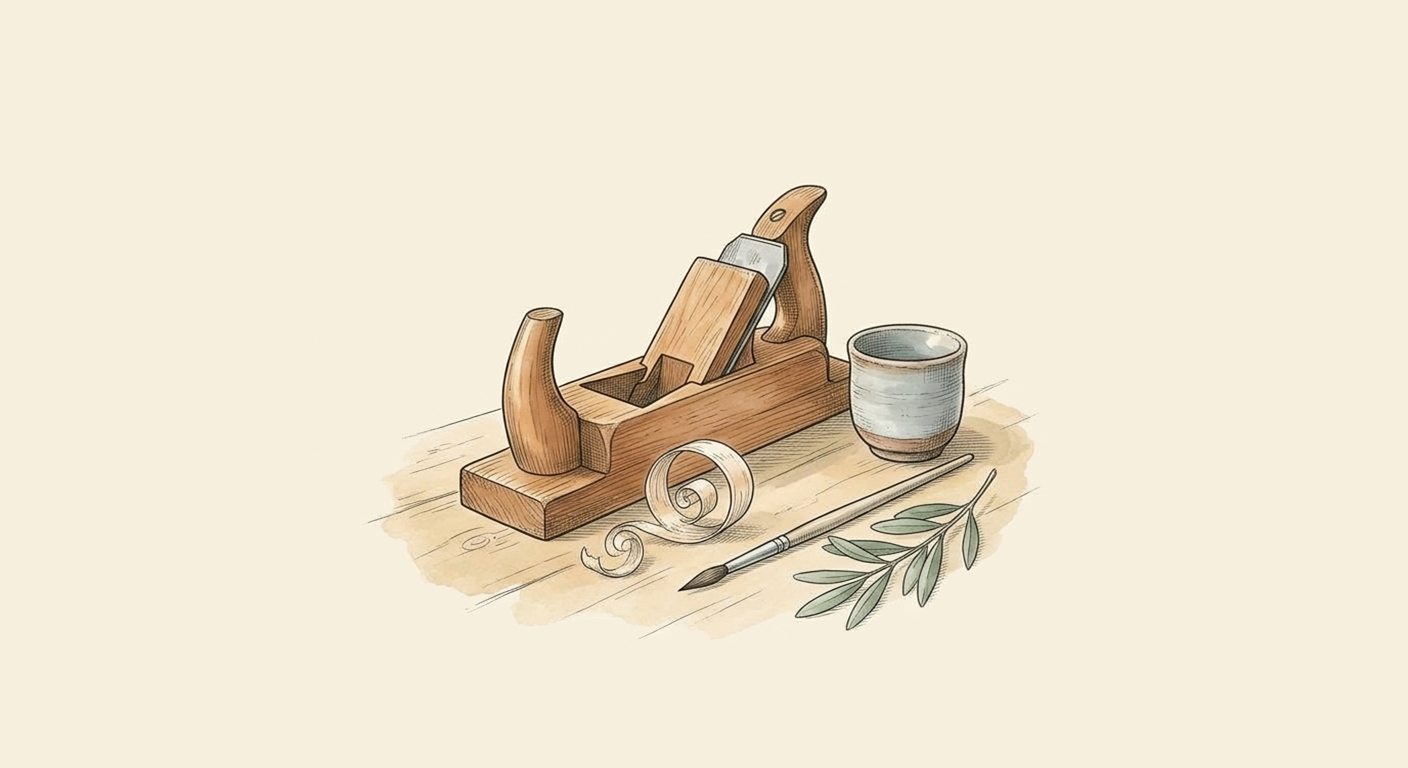
Yet a master luthier's week is also full of necessary chores. Someone has to sweep the cedar shavings, sharpen the plane iron on the waterstone, check the drying rack, and organize lumber orders.
In a healthy workshop, an apprentice clears those chores away and lays out the chisels, so the luthier can spend all morning tuning the spruce soundboard by ear. That is the exact model we use for personal AI at work.
Three clear zones on the workbench
Instead of giving an assistant vague instructions to "help with my job," keep boundaries strict. We think every personal assistant should operate across three distinct task zones that the software cannot cross on its own:
1. Administrative chores: handle and verify
This first zone covers the repetitive overhead that steals evenings and weekends. It includes matching supplier receipts against packing slips, transcribing clinical notes into standard insurance forms, looking up billing codes, and checking schedules for conflicts.
Here, an assistant that works only for you can run the task from start to finish, provided every output passes a strict checklist of factual rules. If a required date is missing or a private name would leak to the wrong recipient, the assistant stops immediately rather than guessing.
2. Research and preparation: gather and lay out the tools
In the second zone, the assistant acts like a thoughtful apprentice preparing the workbench before the master arrives. For a legal aid advocate, it might pull together the relevant clauses from four hundred pages of housing regulations and highlight where two witnesses disagreed.
For a carpenter or an architect, it might compare timber span tables against local building codes and lay out the exact source passages side by side. The assistant never presents its summary as the final word. It arranges the primary evidence clearly so the human practitioner can inspect the facts and think for themselves.3
3. Human craft and judgment: hands off without permission
The third zone holds the heart of the craft. It includes delivering a difficult medical diagnosis, encouraging a struggling student, signing a structural safety attestation, or carving the arch of a spruce soundboard.
In our design, this zone is protected by a hard lock, not a polite suggestion. An assistant cannot sign a professional commitment, send a sensitive message, or make a judgment call on its own. Even if a prompt tries to rush it into overstepping, the software is blocked at the boundary until the person explicitly reviews and approves the step.
An afternoon in Dr. Patel's clinic
To see how those three zones feel during an ordinary workday, return to that neighbourhood health clinic one afternoon. Dr. Maya Patel is seeing a ten-year-old boy whose asthma has flared up every time cold weather arrives.
Under the old system, Dr. Patel spent half the fifteen-minute visit staring at her computer monitor, clicking through drop-down menus to prove to the insurer that she had already tried a lower-tier inhaler last winter. The boy and his mother talked mostly to the side of her face.
With a craft-preserving assistant running locally on her clinic workstation, the afternoon looks very different. Before the appointment begins, the assistant works in Zone 2. It pulls the boy's three previous winter visits and lays the peak-flow readings side by side on one clean card.
During the visit, the screen stays out of the way. That is Zone 3. Dr. Patel kneels beside the chair, listens to the boy's chest, and watches how he holds his spacer. She notices that he feels embarrassed to use the bulky inhaler in front of classmates at recess. No software could spot that hesitation or earn the child's trust.
Together, Dr. Patel and the family choose a smaller breath-actuated inhaler he can keep in his coat pocket. Once they agree, the assistant steps into Zone 1. It fills out the insurer's prior-authorisation form using the verified peak-flow dates from last winter, checks that every mandatory field matches the chart, and queues the form for Dr. Patel's thirty-second review.
When five o'clock arrives, the forms are already verified and filed. Dr. Patel locks her office door at half past five and walks home while the sun is still up.
Guardrails that protect skill instead of eroding it
Separating chores from craft also helps us avoid a quieter danger: the slow erosion of human skill over time. Field studies of workplace AI show that well-designed tools can help newer workers learn faster by surfacing the practical habits of experienced colleagues.3
Yet if a tool makes every hard decision in the background, apprentices never develop their own judgment, and seasoned professionals gradually lose their edge. Keeping craft healthy requires honest engineering discipline:
- Checkable facts, not smooth talk. When an assistant finishes a piece of paperwork, it should not grade its own homework with a flattering summary. It checks concrete facts: whether every figure matches the source receipt, whether mandatory notices are attached, and whether private records stayed inside the room.
- One mistake on a hard rule stops the delivery. In commercial chatbots, a mostly good draft that exposes a client's phone number is treated as a minor slip. In professional work, if a privacy or safety boundary is crossed, the draft must be blocked completely until the person fixes it.
- Keeping the apprentice in the loop. Good tools show why a regulation applies or where a structural load sits, turning daily preparation into a chance to sharpen human understanding rather than dull it.
- Protecting time for mentorship. When senior nurses, builders, and teachers are freed from two hours of nightly compliance forms, they regain the unhurried afternoon half-hours needed to teach newcomers by example.
Work worth coming home from
Think back to that clinic desk at seven in the evening, or the luthier's bench at the end of the day. Personal computing was never meant to turn human beings into exhausted clerks feeding data into distant servers. Nor should it turn skilled practitioners into passive spectators watching a vending machine sign their name.
When we draw a bright, enforceable line between the chores that drain us and the craft that defines us, software finally takes its proper place. The cedar shavings are swept, the forms sit neatly finished to the side, the evening belongs to your family again, and the work that matters stays firmly in human hands.
Sources
- Christine Sinsky et al. (2016), "Allocation of Physician Time in Ambulatory Practice: A Time and Motion Study in 4 Specialties," Annals of Internal Medicine, 165(11), 753–760. ↩
- David H. Autor, Frank Levy, and Richard J. Murnane (2003), "The Skill Content of Recent Technological Change: An Empirical Exploration," Quarterly Journal of Economics, 118(4), 1279–1333. ↩
- Erik Brynjolfsson, Danielle Li, and Lindsey R. Raymond (2023), "Generative AI at Work," NBER Working Paper 31161. ↩