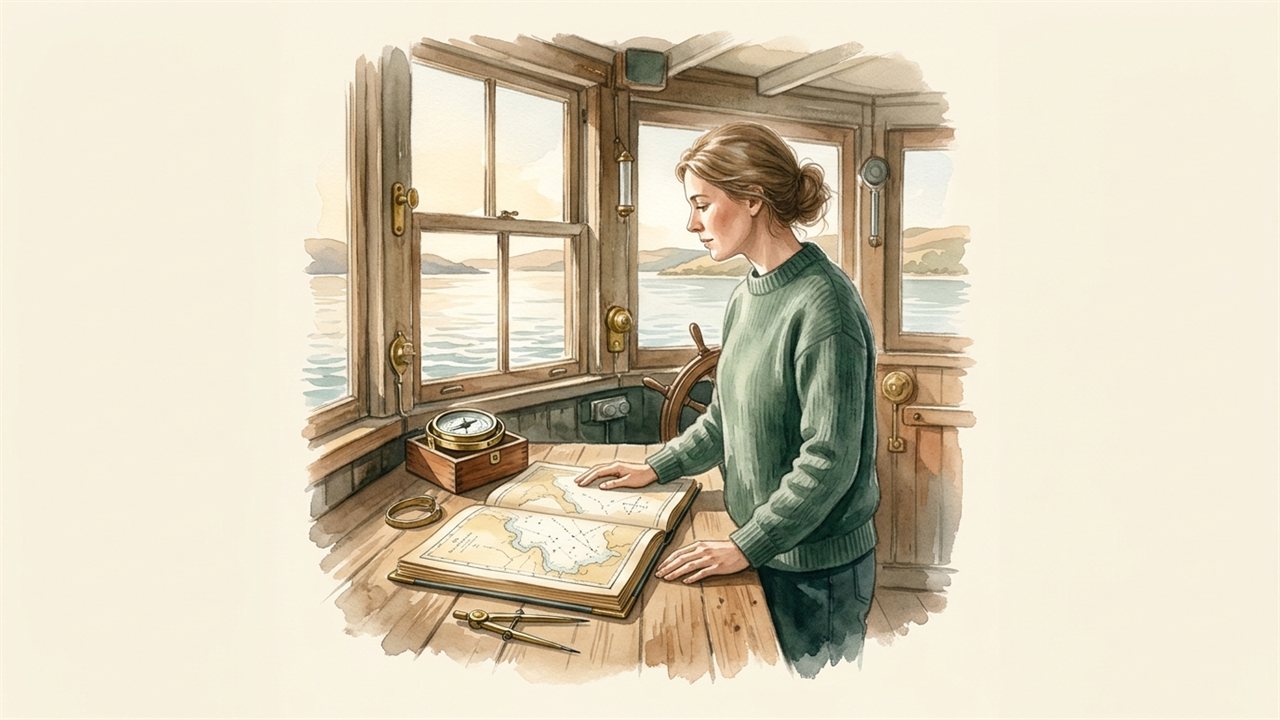
Showing the roads an assistant didn't take
Most AI assistants hand you a single, polished answer. What they keep hidden are the three other choices they almost made. Seeing the roads not taken is how we keep human judgment at the wheel.
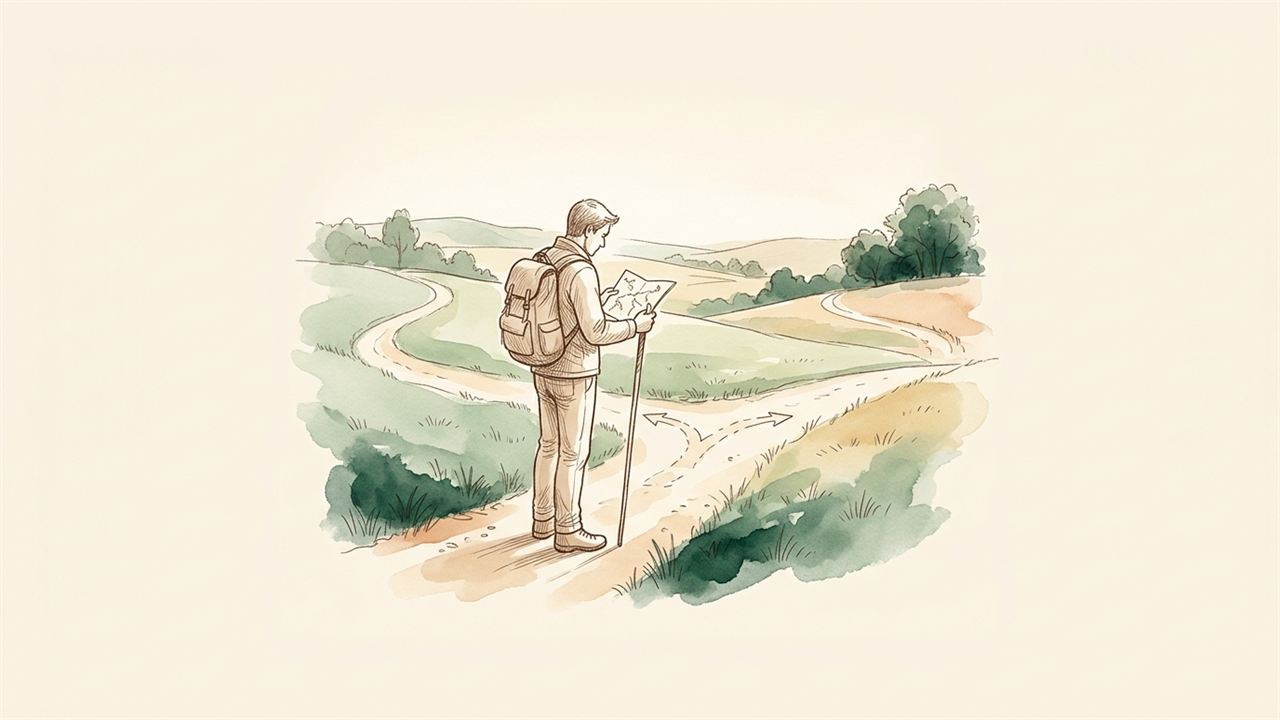
Until recently, whenever someone made an important decision on your behalf, you could ask them how they reached it. A mechanic choosing replacement brake pads, a travel agent routing around winter storms, or a neighbor borrowing your lawnmower could explain their thinking. They remembered the options they weighed and why they set alternative choices aside.
Automated software assistants are now stepping into those roles. AI assistants read email, compare schedules, draft contracts, and execute transactions on our behalf. They are fast, tireless, and increasingly capable. Yet when an assistant hands you a completed task, it almost always presents a single finished answer. It does not mention the other paths it considered and discarded along the way. That silence feels tidy, but it hides a risk.
The silent passenger at the mountain fork
Picture driving through an unfamiliar mountain pass at dusk with a local guide in the passenger seat. At an unmarked fork in the gravel road, they casually steer left without speaking. If they say nothing, your grip tightens on the steering wheel. You wonder whether the right fork was flooded, whether it was shorter, or whether they simply guessed.
Now imagine they point to the dash and explain calmly instead. "The right turn heads down along the creek bed, which often floods after rain, so we are taking the ridge trail instead." Instantly, you understand their reasoning. You can check the sky, weigh the trade-off, and speak up if you know the ridge road is closed for repairs.
Most artificial intelligence assistants behave like the silent passenger. When you ask software to draft a letter, schedule appointments, or plan a project, it returns a single finished result. It does not mention the other paths it considered and discarded along the way. That silence feels efficient, but it hides a risk.
The single smooth answer
When software hands you a single confident answer, your brain assumes the problem has only one sensible solution. Human factors researchers call this automation complacency.3, 4 Because the machine sounds certain, people naturally lower their guard and accept the output without digging deeper.
Recent empirical studies show something striking about human behavior.1 When people review an automated answer, they almost never invent alternative routes on their own. We rarely stop to ask what else the model could have done. But when an interface explicitly shows the rejected options, everything changes. People begin inspecting the assistant's reasoning critically.
Exposing those alternatives breaks the illusion of certainty by revealing the counterfactual choices that were set aside.2 It reminds us that every automated action is the result of trade-offs, confidence scores, and heuristic boundaries. When those forks stay invisible, you are not really directing the assistant. You are merely rubber-stamping its private guesses.
The garden of forking paths: closed vs open choices
Three everyday moments where rejected choices matter
Consider three practical situations where seeing the roads not taken protects daily life.
Rescheduling a clinic visit. Suppose your assistant reschedules a routine checkup. It presents a confirmation for Thursday at two in the afternoon. What it hides is that it rejected a Friday morning slot because the doctor had fewer open minutes, and rejected a Wednesday visit because it required a transfer between two city buses. If you know that Friday mornings work better for your family, seeing those rejected forks lets you switch with a single tap.
Drafting a sensitive letter. Imagine asking an assistant to write a note to a landlord about water damage in your ceiling. The assistant drafts a polite request asking for an inspection next week. In doing so, it discarded a formal notice citing tenant rights codes and a casual message without dates. Seeing those discarded tones lets you decide whether your situation calls for friendly patience or formal legal documentation.
Managing cooperative community funds. Picture a community garden buying bulk supplies for the winter. The assistant selects a single vendor offering commercial fertilizer. It rejected an organic compost cooperative that charged slightly higher shipping. If the garden committee cannot see that rejected alternative, they miss the chance to align the purchase with their environmental values.
What this means
True human oversight does not mean re-doing all the work from scratch. It means being able to see where the assistant paused, inspect what it set aside, and redirect its steps when common sense disagrees with its ranking.
Rewinding the tape instead of starting over
One of the most frustrating parts of modern AI tools is how brittle they are. If an assistant takes a wrong turn on step four of a complex project, you often have to discard the entire result and begin again. That friction tempts people to settle for mediocre or slightly flawed outputs.
Visual path maps solve that frustration through branching rewinds. When software records its decision forks, you do not need to rewrite the prompt. You simply click on the fork where the assistant hesitated, select the rejected branch, and let the software proceed down the better path.
This turns automated execution into a genuine partnership. The assistant does the heavy lifting of exploring possibilities, while you provide the judgment that keeps work grounded in real-world context.
What must happen next
Commercial platforms often hide these decision forks because they worry that exposing uncertainty will make their models look weak. They assume users prefer the illusion of effortless magic over the reality of probabilistic choices.
That assumption is backwards. Trust comes from honesty about limits, clear receipts of actions taken, and visible records of choices set aside. We explore related safeguards in our guides on Who is actually acting? and Why assistants should ask instead of guessing.
You can explore these decision boundaries today in our Shared Horizon lab. Our open action card on exposing assistant path maps provides practical guidance for building interfaces that keep people in charge.
Where this leaves you
The next time an AI assistant offers a confident recommendation, pause for a moment. Ask yourself: What other options did this tool consider? Why was this specific choice chosen over the others? Can I see the road it did not take?
Visible decision forks keep human judgment firmly in the driver's seat as machines take on longer errands.
1. Madeleine Grunde-McLaughlin, Hafsah Usman, Daniel Mitroshkov et al., Agentic Path Maps: Exposing an Agent's Traversal Through the Garden of Forking Paths, arXiv:2611.04183 (November 2026).
2. Sandra Wachter, Brent Mittelstadt, and Chris Russell, Counterfactual Explanations Without Opening the Black Box: Automated Decisions and the GDPR, Harvard Journal of Law & Technology, Vol. 31, No. 2, pp. 841–887 (2018); preprint: arXiv:1711.00399.
3. Raja Parasuraman and Dietrich H. Manzey, Complacency and Bias in Human Use of Automation: An Attentional Integration, Human Factors, Vol. 52, No. 3, pp. 381–410 (June 2010).
4. John D. Lee and Katrina A. See, Trust in Automation: Designing for Appropriate Reliance, Human Factors, Vol. 46, No. 1, pp. 50–80 (Spring 2004).